

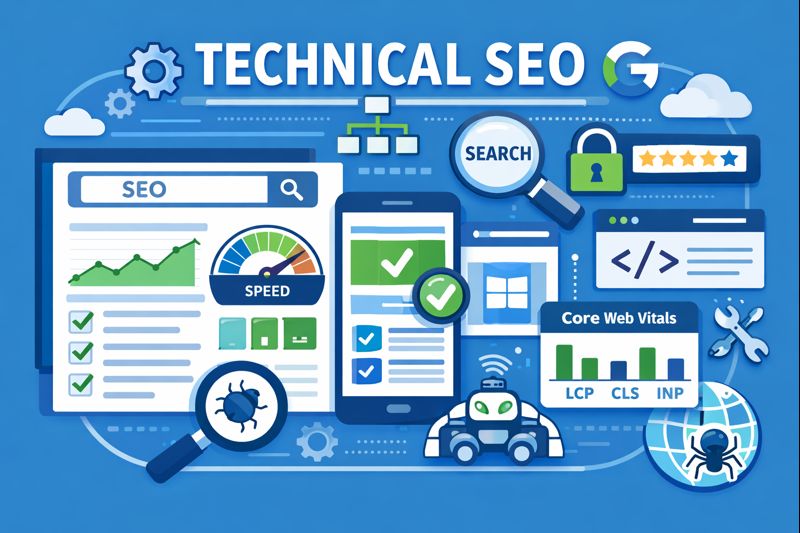
Technical SEO is the backbone of every successful website. No matter how great your content is or how many backlinks you earn, your site will struggle to rank if search engines can’t properly crawl, understand, and trust it. For small business owners, bloggers, and beginners, Technical SEO may sound intimidating—but once you understand the fundamentals, it becomes a powerful growth tool rather than a mystery.
In this in-depth guide, you’ll learn what Technical SEO really is, why it matters, common SEO technical issues to watch out for, and how proper website technical optimization can directly impact rankings, traffic, and business growth.
What Is Technical SEO? (Beginner-Friendly Explanation)
Technical SEO refers to the process of optimizing a website’s technical foundation so search engines like Google can easily crawl, index, and rank its pages. Unlike content SEO (keywords, blogs) or off-page SEO (backlinks), Technical SEO focuses on how your website works behind the scenes.
Think of your website like a building:
- Content SEO is the interior design
- Off-page SEO is your reputation
- Technical SEO is the foundation, wiring, and structure
If the foundation is weak, everything else suffers.
Technical SEO for beginners is not about coding expertise—it’s about understanding how search engines interact with your site and removing technical barriers that block visibility.
Why Technical SEO Is Important for Rankings
Search engines aim to deliver fast, secure, and user-friendly results. Technical SEO ensures your website meets these expectations.
Here’s why Technical SEO plays a critical role in rankings:
- Search engines must crawl and index your pages before they can rank
- Website speed affects user experience and bounce rate
- Mobile usability is a ranking factor
- Secure websites build trust and credibility
- Clean site architecture helps distribute ranking authority
Without solid Technical SEO, even the best content may never reach page one.
Common Technical SEO Issues (You Should Watch Out For)
Many websites—especially small business and blog sites—suffer from hidden technical problems. Some of the most common SEO technical issues include:
- Pages blocked by robots.txt
- Incorrect or missing XML sitemap
- Duplicate content issues
- Slow page loading speed
- Broken internal links
- Poor mobile responsiveness
- Missing HTTPS or security warnings
- Indexing errors in Google Search Console
- Unoptimized Core Web Vitals
- Incorrect canonical tags
These issues quietly damage rankings and often go unnoticed without a proper technical SEO audit.
Key Elements of Technical SEO
Let’s break down the most important components of Technical SEO in simple terms.
Crawlability & Indexability
Crawlability means search engines can access your pages. Indexability means those pages can be stored and shown in search results.
Key factors include:
- robots.txt configuration
- XML sitemap submission
- Proper internal linking
- No accidental “noindex” tags
- Clean URL structure
If search engines can’t crawl or index your site, rankings are impossible—no matter how good your content is.
Website Speed & Performance
Website speed is one of the most important technical ranking signals. Slow sites frustrate users and reduce conversions.
Speed optimization involves:
- Image compression
- Browser caching
- Reducing unnecessary scripts
- Using efficient hosting
- Minimizing CSS and JavaScript
Website technical optimization focused on performance improves both SEO and user experience.
Mobile Friendliness
Google uses mobile-first indexing, meaning it evaluates your mobile version before desktop.
Your site should:
- Adapt to all screen sizes
- Use readable font sizes
- Avoid intrusive popups
- Load quickly on mobile networks
A mobile-unfriendly website loses rankings and customers.
Core Web Vitals
Core Web Vitals measure real-world user experience. They focus on:
- Largest Contentful Paint (LCP) – loading speed
- Interaction to Next Paint (INP) – responsiveness
- Cumulative Layout Shift (CLS) – visual stability
Improving Core Web Vitals is a core part of modern Technical SEO and directly influences rankings.
HTTPS & Website Security
Security is a trust signal for both users and search engines.
HTTPS ensures:
- Encrypted data transfer
- Visitor trust
- Protection against data interception
Websites without HTTPS often display browser warnings and struggle to rank competitively.
Structured Data (Schema Markup)
Structured data helps search engines understand your content better and can unlock rich results like FAQs, reviews, and star ratings.
Examples include:
- FAQ schema
- Article schema
- Local business schema
- Product schema
While schema doesn’t guarantee higher rankings, it improves visibility and click-through rates.
How to Do a Technical SEO Audit (Step by Step)
A technical SEO audit is the process of identifying and fixing technical issues that block performance.
Here’s a simplified step-by-step approach:
Step 1: Check Crawl & Index Status
- Review Google Search Console coverage reports
- Identify excluded or error pages
Step 2: Analyze Site Speed
- Test loading speed
- Identify large files and slow scripts
Step 3: Review Mobile Usability
- Ensure responsive design
- Fix mobile usability errors
Step 4: Inspect Site Structure
- Logical URL hierarchy
- Clean internal linking
- No orphan pages
Step 5: Validate Security & HTTPS
- Check SSL certificate
- Fix mixed content issues
Step 6: Review Core Web Vitals
- Analyze real user performance metrics
- Improve LCP, INP, and CLS
Professional technical SEO services go deeper, but this process covers the essentials.
Technical SEO for Beginners: Common Mistakes to Avoid
If you’re new to Technical SEO, avoid these common mistakes:
- Ignoring technical issues and focusing only on content
- Blocking important pages accidentally
- Using slow or unreliable hosting
- Overusing plugins that slow down the site
- Forgetting mobile optimization
- Skipping regular technical SEO audits
Technical SEO for beginners is about consistency and prevention—not one-time fixes.
How Technical SEO Helps Business Growth
When Technical SEO is done correctly, the benefits go far beyond rankings.
It helps businesses by:
- Increasing organic traffic
- Improving conversion rates
- Enhancing user experience
- Building long-term search visibility
- Reducing dependency on paid ads
- Supporting scalable growth
Strong website technical optimization turns your website into a reliable digital asset that works 24/7.
FAQs About Technical SEO
1. What is Technical SEO in simple words?
Technical SEO is the process of making sure your website works properly for search engines and users by improving speed, structure, security, and crawlability.
2. Is Technical SEO necessary for small businesses?
Yes. Technical SEO helps small businesses compete by ensuring their websites are fast, secure, and search-engine friendly.
3. How often should a technical SEO audit be done?
At least once every 6–12 months, or after major website changes such as redesigns or migrations.
4. Can Technical SEO improve rankings without new content?
Yes. Fixing SEO technical issues often leads to ranking improvements even without publishing new content.
5. Do beginners need technical SEO services?
Beginners can handle basics, but professional technical SEO services help identify advanced issues and prevent costly mistakes.
Conclusion: Why Technical SEO Is a Long-Term Investment
Technical SEO is not a one-time task—it’s an ongoing investment in your website’s health, performance, and growth. From crawlability and speed to Core Web Vitals and security, every technical improvement strengthens your site’s ability to rank, convert, and scale.
If you want your content and marketing efforts to deliver real results, Technical SEO must come first.
If you’re looking for expert guidance, XyronByte SEO offers professional technical SEO services designed for small businesses, bloggers, and growing websites. You can start with a free technical SEO audit to uncover hidden issues and opportunities—no pressure, just clarity and expert insight.
👉 Reach out today and build a stronger, search-ready website foundation.
According to Google’s official documentation, proper crawlability and page experience are essential ranking factors for modern websites.