
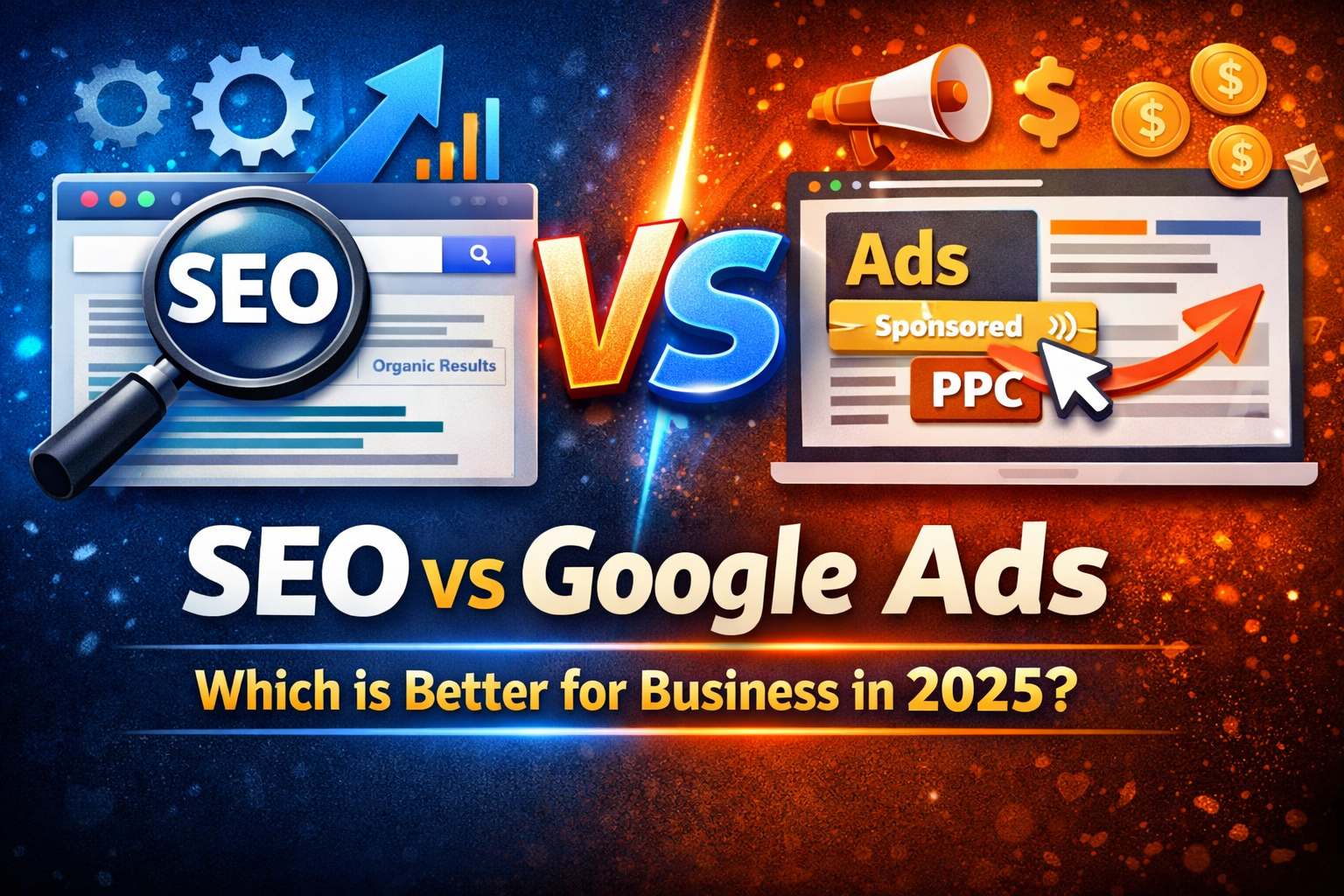
In today’s digital world, businesses have two major ways to get visibility on search engines: SEO (Search Engine Optimization) and Google Ads (Pay-Per-Click advertising). SEO is the process of improving your website so it ranks organically (for free) in search engine results, while Google Ads is a paid advertising platform where businesses pay to appear at the top of search results instantly. Both are powerful marketing strategies, but choosing the right one depends on your business goals, budget, and timeline.
In this detailed guide, we’ll compare SEO vs Google Ads, explain their pros and cons, discuss real-world use cases, and help you decide which strategy works best for your business in 2025.
What is SEO?
SEO (Search Engine Optimization) is the process of optimizing your website to rank higher in organic search results on Google and other search engines.
It includes:
- Keyword research
- Content creation
- Technical optimization
- Backlink building
- Improving user experience
The goal of SEO is simple: bring organic traffic to your website without paying for clicks.
According to the Google SEO Starter Guide, optimizing content and improving user experience are key ranking factors.
Key Features of SEO
- Long-term strategy
- Builds authority and trust
- Generates consistent organic traffic
- Requires time and effort
What is Google Ads?
Google Ads is a paid advertising platform where businesses bid on keywords to display ads in search results.
With Google Ads:
- You pay for each click (PPC – Pay Per Click)
- Ads appear instantly at the top of search results
- You can target specific audiences
Key Features of Google Ads
- Instant visibility
- Flexible budgeting
- Measurable results
- Highly targeted advertising
Google Ads is a paid advertising platform provided by Google where businesses can run PPC campaigns through the Google Ads official website.
SEO vs Google Ads: Key Differences
Below is a clear comparison between SEO and Google Ads.
| Feature | SEO | Google Ads |
|---|---|---|
| Cost | Free traffic but requires investment in time and resources | Pay per click (PPC model) |
| Results Speed | Slow (3–6 months or more) | Instant results |
| Traffic Type | Organic traffic | Paid traffic |
| Long-term Value | High | Stops when budget ends |
| Trust Factor | Higher credibility | Seen as advertisements |
| ROI Timeline | Long-term | Short-term |
SEO Benefits for Businesses
Many businesses invest in professional SEO services to improve search rankings and generate consistent organic traffic.
Understanding the differences between SEO vs Google Ads helps businesses choose the most effective marketing strategy for their goals.
SEO remains one of the most powerful digital marketing strategies in 2025.
1. Long-Term Traffic Growth
Once your website ranks, you can get continuous organic traffic without paying for every visitor.
2. Higher Trust and Credibility
Users trust organic search results more than ads.
3. Cost-Effective in the Long Run
While SEO requires investment upfront, it becomes cheaper over time compared to PPC.
4. Builds Brand Authority
High rankings signal authority and reliability.
5. Sustainable Marketing Strategy
SEO works even when you stop spending actively.
Google Ads Benefits for Businesses
Google Ads offers powerful advantages, especially for quick results.
1. Instant Visibility
Your ads appear immediately after launching a campaign.
2. Highly Targeted Audience
You can target users based on location, behavior, device, and demographics.
3. Measurable ROI
Google Ads provides detailed analytics and tracking.
4. Flexible Budget Control
You can start with small budgets and scale anytime.
5. Perfect for Promotions and Seasonal Sales
Ads are ideal for short-term campaigns.
SEO Cost vs PPC Cost
One of the biggest concerns for businesses is cost.
When comparing SEO vs Google Ads, cost plays a major role because SEO requires time investment while Google Ads involves direct spending.
SEO Cost
- Content creation costs
- SEO tools and software
- Time investment
- Hiring SEO experts
However, SEO does not charge per click.
PPC Cost (Google Ads)
- Cost per click varies by keyword
- Competitive industries can be expensive
- Budget must be maintained continuously
Key Insight:
SEO is cheaper long-term, while Google Ads requires continuous spending.
Organic Traffic vs Paid Traffic
The biggest difference in SEO vs Google Ads is organic traffic versus paid traffic generation.
Understanding the difference is essential when comparing SEO vs Google Ads.
Organic Traffic
- Free visitors from search engines
- Builds trust
- Long-term growth
Paid Traffic
- Immediate visitors
- Highly targeted
- Stops when ads stop
Best strategy often combines both.
Pros and Cons of SEO
Pros
- Long-lasting results
- High credibility
- Lower cost over time
- Continuous traffic
Cons
- Slow results
- Requires expertise
- Algorithm changes affect rankings
Pros and Cons of Google Ads
Pros
- Immediate results
- Highly measurable
- Easy to control budget
- Great for quick sales
Cons
- Expensive long-term
- Stops when budget ends
- Lower trust compared to organic results
Real-World Use Cases
Case 1: Local Service Business
A local plumber benefits more from SEO because people search for services nearby.
Case 2: New E-commerce Store
Google Ads helps generate quick sales while SEO builds long-term traffic.
Case 3: SaaS Company
SEO works best for long-term lead generation through content marketing.
Case 4: Seasonal Business
Google Ads is perfect for holiday sales campaigns.
When to Choose SEO
Choose SEO if:
- You want long-term traffic growth
- You have a limited advertising budget
- You want to build brand authority
- You can wait for results
SEO is ideal for sustainable business growth.
When to Choose Google Ads
Choose Google Ads if:
- You need immediate results
- You are launching a new product
- You want to test market demand
- You have a flexible budget
Google Ads is best for quick visibility.
Best Strategy in 2025: Use Both Together
Experts recommend combining both approaches instead of choosing only SEO vs Google Ads separately.
In 2025, the smartest businesses combine SEO and Google Ads.
Why Combine Both?
- Ads provide instant traffic
- SEO builds long-term authority
- Data from ads helps SEO strategy
- Maximizes overall visibility
This hybrid strategy delivers the best ROI.
Final Recommendation for Small Businesses
For small businesses in 2025, the best approach is:
- Start with Google Ads to generate quick leads.
- Invest in SEO for long-term growth.
- Gradually reduce ad spending as organic traffic increases.
This balanced strategy ensures sustainable success while maintaining steady cash flow.
FAQ: SEO vs Google Ads
1. Which is better: SEO or Google Ads?
Neither is universally better. SEO is best for long-term growth, while Google Ads is ideal for quick results.
2. Is SEO cheaper than Google Ads?
Yes, SEO is generally cheaper long-term because you don’t pay per click.
3. How long does SEO take to work?
SEO typically takes 3–6 months to show noticeable results.
4. Can I use SEO and Google Ads together?
Yes, combining both strategies produces the best marketing results.
5. Which is better for small businesses?
Small businesses should start with Google Ads for immediate traffic and invest in SEO for long-term success.
Conclusion
The debate between SEO vs Google Ads is not about choosing one over the other—it’s about understanding your business needs. SEO provides sustainable organic traffic and brand authority, while Google Ads offers instant visibility and measurable results.
In 2025, the most successful businesses will be those that strategically combine SEO and paid advertising to maximize growth, visibility, and ROI.
Ultimately, the decision between SEO vs Google Ads depends on your business goals, budget, and timeline.